

SSCP Exam Question 256
Which of the following transmission media would NOT be affected by cross talk or interference?
Correct Answer: D
Section: Network and Telecommunications
Explanation/Reference:
Only fiber optic cables are not affected by crosstalk or interference.
For your exam you should know the information about transmission media:
Copper Cable
Copper cable is very simple to install and easy to tap. It is used mostly for short distance and supports voice and data.
Copper has been used in electric wiring since the invention of the electromagnet and the telegraph in the
1820s.The invention of the telephone in 1876 created further demand for copper wire as an electrical conductor.
Copper is the electrical conductor in many categories of electrical wiring. Copper wire is used in power generation, power transmission, power distribution, telecommunications, electronics circuitry, and countless types of electrical equipment. Copper and its alloys are also used to make electrical contacts. Electrical wiring in buildings is the most important market for the copper industry. Roughly half of all copper mined is used to manufacture electrical wire and cable conductors.
Copper Cable
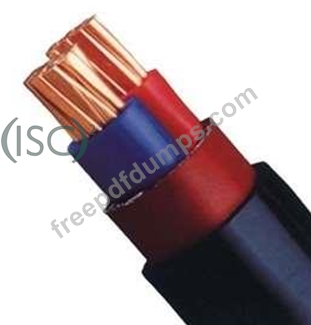
Image Source - http://i00.i.aliimg.com/photo/v0/570456138/FRLS_HR_PVC_Copper_Cable.jpg Coaxial cable Coaxial cable, or coax (pronounced 'ko.aks), is a type of cable that has an inner conductor surrounded by a tubular insulating layer, surrounded by a tubular conducting shield. Many coaxial cables also have an insulating outer sheath or jacket. The term coaxial comes from the inner conductor and the outer shield sharing a geometric axis. Coaxial cable was invented by English engineer and mathematician Oliver Heaviside, who patented the design in 1880.Coaxial cable differs from other shielded cable used for carrying lower-frequency signals, such as audio signals, in that the dimensions of the cable are controlled to give a precise, constant conductor spacing, which is needed for it to function efficiently as a radio frequency transmission line.
Coaxial cable are expensive and does not support many LAN's. It supports data and video Coaxial Cable

Image Source - http://www.tlc-direct.co.uk/Images/Products/size_3/CARG59.JPG Fiber optics An optical fiber cable is a cable containing one or more optical fibers that are used to carry light. The optical fiber elements are typically individually coated with plastic layers and contained in a protective tube suitable for the environment where the cable will be deployed. Different types of cable are used for different applications, for example long distance telecommunication, or providing a high-speed data connection between different parts of a building.
Fiber optics used for long distance, hard to splice, not vulnerable to cross talk and difficult to tap. It supports voice data, image and video.
Radio System
Radio systems are used for short distance,cheap and easy to tap.
Radio is the radiation (wireless transmission) of electromagnetic signals through the atmosphere or free space.
Information, such as sound, is carried by systematically changing (modulating) some property of the radiated waves, such as their amplitude, frequency, phase, or pulse width. When radio waves strike an electrical conductor, the oscillating fields induce an alternating current in the conductor. The information in the waves can be extracted and transformed back into its original form.
Fiber Optics
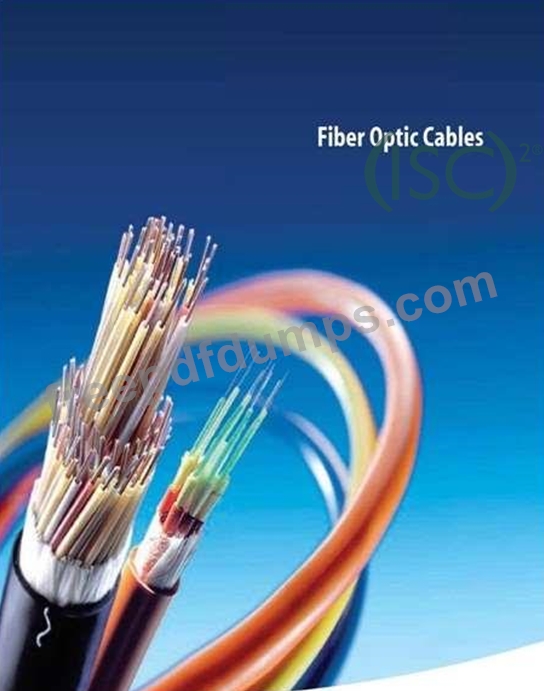
Image Source - http://aboveinfranet.com/wp-content/uploads/2014/04/fiber-optic-cables-above-infranet- solutions.jpg Microwave radio system Microwave transmission refers to the technology of transmitting information or energy by the use of radio waves whose wavelengths are conveniently measured in small numbers of centimetre; these are called microwaves.
Microwaves are widely used for point-to-point communications because their small wavelength allows conveniently-sized antennas to direct them in narrow beams, which can be pointed directly at the receiving antenna. This allows nearby microwave equipment to use the same frequencies without interfering with each other, as lower frequency radio waves do. Another advantage is that the high frequency of microwaves gives the microwave band a very large information-carrying capacity; the microwave band has a bandwidth 30 times that of all the rest of the radio spectrum below it. A disadvantage is that microwaves are limited to line of sight propagation; they cannot pass around hills or mountains as lower frequency radio waves can.
Microwave radio transmission is commonly used in point-to-point communication systems on the surface of the Earth, in satellite communications, and in deep space radio communications. Other parts of the microwave radio band are used for radars, radio navigation systems, sensor systems, and radio astronomy.
Microwave radio systems are carriers for voice data signal, cheap and easy to tap.
Microwave Radio System
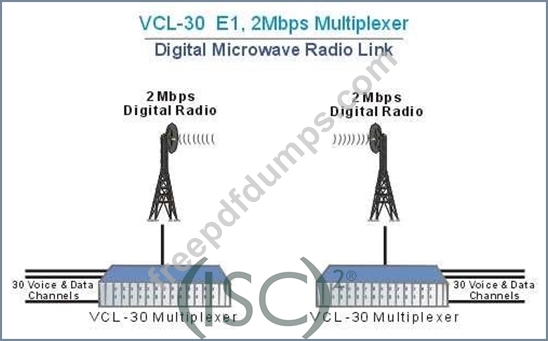
Image Source - http://www.valiantcom.com/images/applications/e1_digital_microwave_radio.gif Satellite Radio Link Satellite radio is a radio service broadcast from satellites primarily to cars, with the signal broadcast nationwide, across a much wider geographical area than terrestrial radio stations. It is available by subscription, mostly commercial free, and offers subscribers more stations and a wider variety of programming options than terrestrial radio.
Satellite radio link uses transponder to send information and easy to tap.
The following answers are incorrect:
Copper Cable - Copper cable is very simple to install and easy to tap. It is used mostly for short distance and supports voice and data.
Radio System - Radio systems are used for short distance,cheap and easy to tap.
Satellite Radio Link - Satellite radio link uses transponder to send information and easy to tap.
The following reference(s) were/was used to create this question:
CISA review manual 2014 page number 265 &
Official ISC2 guide to CISSP CBK 3rd Edition Page number 233
Explanation/Reference:
Only fiber optic cables are not affected by crosstalk or interference.
For your exam you should know the information about transmission media:
Copper Cable
Copper cable is very simple to install and easy to tap. It is used mostly for short distance and supports voice and data.
Copper has been used in electric wiring since the invention of the electromagnet and the telegraph in the
1820s.The invention of the telephone in 1876 created further demand for copper wire as an electrical conductor.
Copper is the electrical conductor in many categories of electrical wiring. Copper wire is used in power generation, power transmission, power distribution, telecommunications, electronics circuitry, and countless types of electrical equipment. Copper and its alloys are also used to make electrical contacts. Electrical wiring in buildings is the most important market for the copper industry. Roughly half of all copper mined is used to manufacture electrical wire and cable conductors.
Copper Cable
Image Source - http://i00.i.aliimg.com/photo/v0/570456138/FRLS_HR_PVC_Copper_Cable.jpg Coaxial cable Coaxial cable, or coax (pronounced 'ko.aks), is a type of cable that has an inner conductor surrounded by a tubular insulating layer, surrounded by a tubular conducting shield. Many coaxial cables also have an insulating outer sheath or jacket. The term coaxial comes from the inner conductor and the outer shield sharing a geometric axis. Coaxial cable was invented by English engineer and mathematician Oliver Heaviside, who patented the design in 1880.Coaxial cable differs from other shielded cable used for carrying lower-frequency signals, such as audio signals, in that the dimensions of the cable are controlled to give a precise, constant conductor spacing, which is needed for it to function efficiently as a radio frequency transmission line.
Coaxial cable are expensive and does not support many LAN's. It supports data and video Coaxial Cable
Image Source - http://www.tlc-direct.co.uk/Images/Products/size_3/CARG59.JPG Fiber optics An optical fiber cable is a cable containing one or more optical fibers that are used to carry light. The optical fiber elements are typically individually coated with plastic layers and contained in a protective tube suitable for the environment where the cable will be deployed. Different types of cable are used for different applications, for example long distance telecommunication, or providing a high-speed data connection between different parts of a building.
Fiber optics used for long distance, hard to splice, not vulnerable to cross talk and difficult to tap. It supports voice data, image and video.
Radio System
Radio systems are used for short distance,cheap and easy to tap.
Radio is the radiation (wireless transmission) of electromagnetic signals through the atmosphere or free space.
Information, such as sound, is carried by systematically changing (modulating) some property of the radiated waves, such as their amplitude, frequency, phase, or pulse width. When radio waves strike an electrical conductor, the oscillating fields induce an alternating current in the conductor. The information in the waves can be extracted and transformed back into its original form.
Fiber Optics
Image Source - http://aboveinfranet.com/wp-content/uploads/2014/04/fiber-optic-cables-above-infranet- solutions.jpg Microwave radio system Microwave transmission refers to the technology of transmitting information or energy by the use of radio waves whose wavelengths are conveniently measured in small numbers of centimetre; these are called microwaves.
Microwaves are widely used for point-to-point communications because their small wavelength allows conveniently-sized antennas to direct them in narrow beams, which can be pointed directly at the receiving antenna. This allows nearby microwave equipment to use the same frequencies without interfering with each other, as lower frequency radio waves do. Another advantage is that the high frequency of microwaves gives the microwave band a very large information-carrying capacity; the microwave band has a bandwidth 30 times that of all the rest of the radio spectrum below it. A disadvantage is that microwaves are limited to line of sight propagation; they cannot pass around hills or mountains as lower frequency radio waves can.
Microwave radio transmission is commonly used in point-to-point communication systems on the surface of the Earth, in satellite communications, and in deep space radio communications. Other parts of the microwave radio band are used for radars, radio navigation systems, sensor systems, and radio astronomy.
Microwave radio systems are carriers for voice data signal, cheap and easy to tap.
Microwave Radio System
Image Source - http://www.valiantcom.com/images/applications/e1_digital_microwave_radio.gif Satellite Radio Link Satellite radio is a radio service broadcast from satellites primarily to cars, with the signal broadcast nationwide, across a much wider geographical area than terrestrial radio stations. It is available by subscription, mostly commercial free, and offers subscribers more stations and a wider variety of programming options than terrestrial radio.
Satellite radio link uses transponder to send information and easy to tap.
The following answers are incorrect:
Copper Cable - Copper cable is very simple to install and easy to tap. It is used mostly for short distance and supports voice and data.
Radio System - Radio systems are used for short distance,cheap and easy to tap.
Satellite Radio Link - Satellite radio link uses transponder to send information and easy to tap.
The following reference(s) were/was used to create this question:
CISA review manual 2014 page number 265 &
Official ISC2 guide to CISSP CBK 3rd Edition Page number 233
SSCP Exam Question 257
The IP header contains a protocol field. If this field contains the value of 1, what type of data is contained within the IP datagram?
Correct Answer: B
If the protocol field has a value of 1 then it would indicate it was ICMP.
The following answers are incorrect:
TCP. Is incorrect because the value for a TCP protocol would be 6. UDP. Is incorrect because the value for an UDP protocol would be 17. IGMP. Is incorrect because the value for an IGMP protocol would be 2.
The following answers are incorrect:
TCP. Is incorrect because the value for a TCP protocol would be 6. UDP. Is incorrect because the value for an UDP protocol would be 17. IGMP. Is incorrect because the value for an IGMP protocol would be 2.
SSCP Exam Question 258
Which of the following is true about digital certificate?
Correct Answer: B
Digital certificate helps others verify that the public keys presented by users are genuine and valid. It is a form of Electronic credential proving that the person the certificate was issued to is who they claim to be.
The certificate is used to identify the certificate holder when conducting electronic transactions. It is issued by a certification authority (CA). It contains the name of an organization or individual, the business address, a serial number, expiration dates, a copy of the certificate
holder's public key (used for encrypting messages), and the digital signature of the
certificate-issuing authority so that a recipient can verify that the certificate is real. Some
digital certificates conform to a standard, X.509. Digital certificates can be kept in registries
so that authenticating users can look up other users' public keys.
Digital certificates are key to the PKI process. The digital certificate serves two roles. First,
it ensures the integrity of the public key and makes sure that the key remains unchanged
and in a valid state. Second, it validates that the public key is tied to the stated owner and
that all associated information is true and correct. The information needed to accomplish
these goals is added into the digital certificate.
A Certificate Authority (CA) is an entity trusted by one or more users as an authority in a
network that issues, revokes, and manages digital certificates.
A Registration Authority (RA) performs certificate registration services on behalf of a CA.
The RA, a single purpose server, is responsible for the accuracy of the information
contained in a certificate request. The RA is also expected to perform user validation
before issuing a certificate request.
A Digital Certificate is not like same as a digital signature, they are two different things, a
digital Signature is created by using your Private key to encrypt a message digest and a
Digital Certificate is issued by a trusted third party who vouch for your identity.
There are many other third parties which are providing Digital Certifictes and not just
Verisign, RSA.
Reference(s) used for this question:
Hernandez CISSP, Steven (2012-12-21). Official (ISC)2 Guide to the CISSP CBK, Third
Edition ((ISC)2 Press) (Kindle Locations 14894-14903). Auerbach Publications. Kindle
Edition.
Gregg, Michael; Haines, Billy (2012-02-16). CASP: CompTIA Advanced Security
Practitioner Study Guide Authorized Courseware: Exam CAS-001 (p. 24). Wiley. Kindle
Edition.
Please refer to http://en.wikipedia.org/wiki/Digital_certificate
What is Digital certificate:
http://searchsecurity.techtarget.com/sDefinition/0,,sid14_gci211947,00.html
another deifination on http://www.webopedia.com/TERM/D/digital_certificate.html
SSCP Exam Question 259
Which of the following was designed as a more fault-tolerant topology than Ethernet, and very resilient when properly implemented?
Correct Answer: C
Token Ring was designed to be a more fault-tolerant topology than Ethernet,
and can be a very resilient topology when properly implemented.
Source: KRUTZ, Ronald L. & VINES, Russel D., The CISSP Prep Guide: Mastering the
Ten Domains of Computer Security, 2001, John Wiley & Sons, Page 72.
and can be a very resilient topology when properly implemented.
Source: KRUTZ, Ronald L. & VINES, Russel D., The CISSP Prep Guide: Mastering the
Ten Domains of Computer Security, 2001, John Wiley & Sons, Page 72.
SSCP Exam Question 260
Which of the following protocols operates at the session layer (layer 5)?
Correct Answer: A
Remotre Procedure Call (RPC) is the only of the above choices to operate at the session layer (layer 5).
All of the other answers were wrong.
LPD operates at layer 7 SPX operates at layer 4 IGMP operates at layer 3.
Reference:
WALLHOFF, John, CBK#2 Telecommunications and Network Security (CISSP Study Guide), April 2002 (page 1).
All of the other answers were wrong.
LPD operates at layer 7 SPX operates at layer 4 IGMP operates at layer 3.
Reference:
WALLHOFF, John, CBK#2 Telecommunications and Network Security (CISSP Study Guide), April 2002 (page 1).
- Other Version
- 77ISC.Vceprep.SSCP.v2022-05-30.by.mildred.592q.pdf
- 12801ISC.SSCP.v2022-05-14.q592
- 20084ISC.SSCP.v2022-01-26.q859
- 112ISC.Exam4labs.SSCP.v2021-08-27.by.janice.837q.pdf
- Latest Upload
- 122Salesforce.OmniStudio-Consultant.v2026-11-25.q93
- 326IIA.IIA-CIA-Part3-CN.v2026-11-24.q351
- 252Microsoft.AZ-801.v2026-11-24.q144
- 193CIRO.RSE.v2026-11-24.q58
- 199MongoDB.C100DBA.v2026-11-24.q78
- 197PaloAltoNetworks.NetSec-Pro.v2026-11-24.q60
- 161Salesforce.MCE-Con-201.v2026-11-24.q49
- 259Microsoft.DP-900.v2026-11-23.q149
- 184Anthropic.CCAR-F.v2026-11-23.q30
- 340CISI.IFC.v2026-11-23.q238