

AZ-700 Exam Question 51
You have an Azure subscription that contains the route tables and routes shown in the following table.

The subscription contains the subnets shown in the following table.

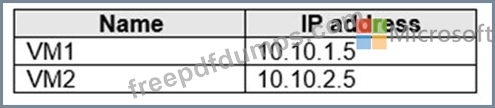
The subscription contains the virtual machines shown in the following table.
There is a Site-to-Site VPN connection to each local network gateway.
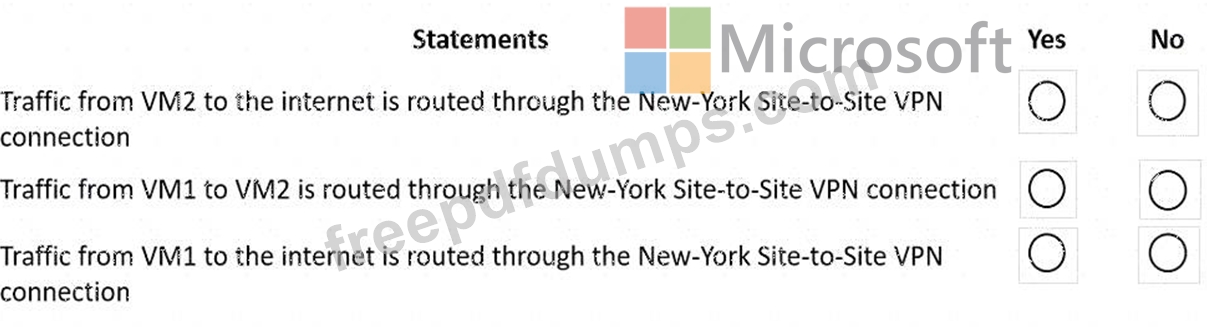
For each of the following statements, select Yes of the statement is true. Otherwise, select No.
NOTE: Each correct selection is worth one point.
The subscription contains the subnets shown in the following table.
The subscription contains the virtual machines shown in the following table.
There is a Site-to-Site VPN connection to each local network gateway.
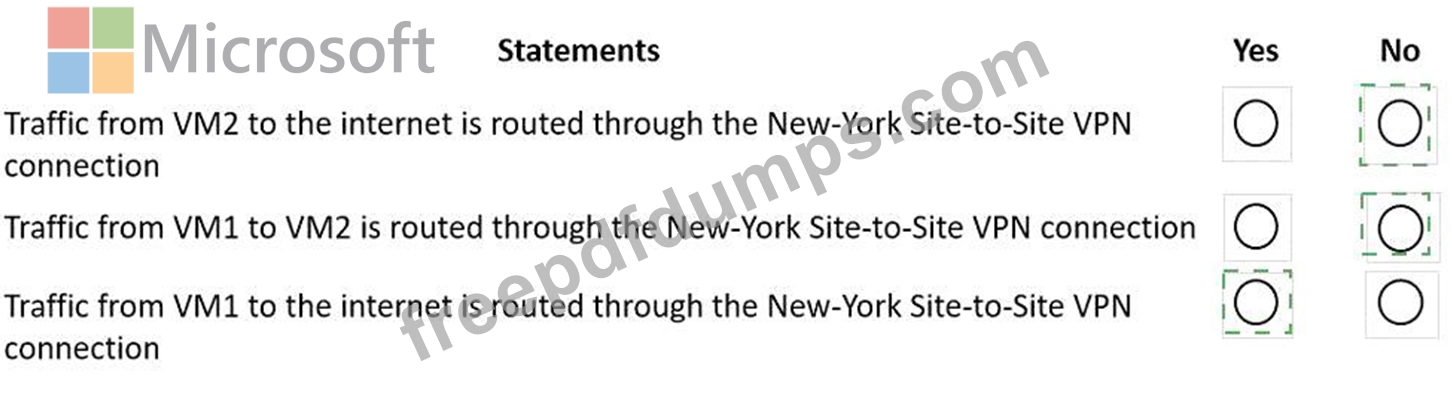
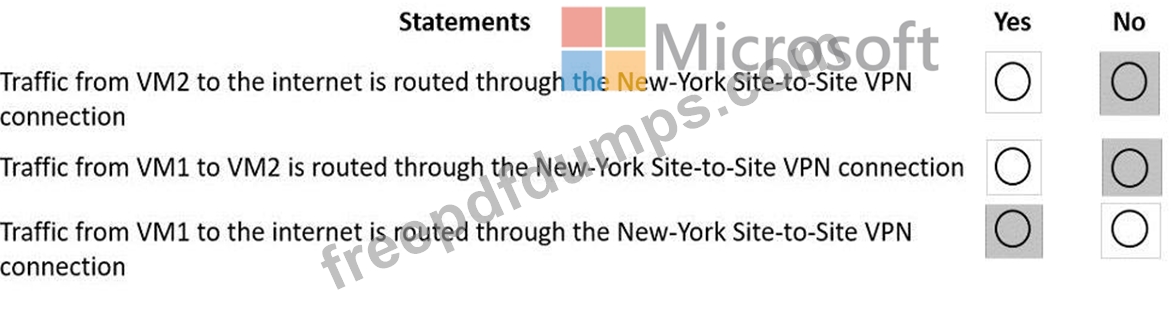
For each of the following statements, select Yes of the statement is true. Otherwise, select No.
NOTE: Each correct selection is worth one point.
AZ-700 Exam Question 52
You are planning an Azure Point-to-Site (P2S) VPN that will use OpenVPN.
Users will authenticate by using an on premises Active Directory domain.
Which additional service should you deploy to support the VPN authentication?
Users will authenticate by using an on premises Active Directory domain.
Which additional service should you deploy to support the VPN authentication?
AZ-700 Exam Question 53
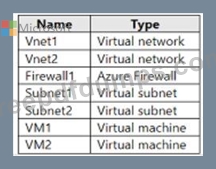
You have an Azure subscription that contains the resources shown in the following table.
The virtual network topology is shown in the following exhibit.

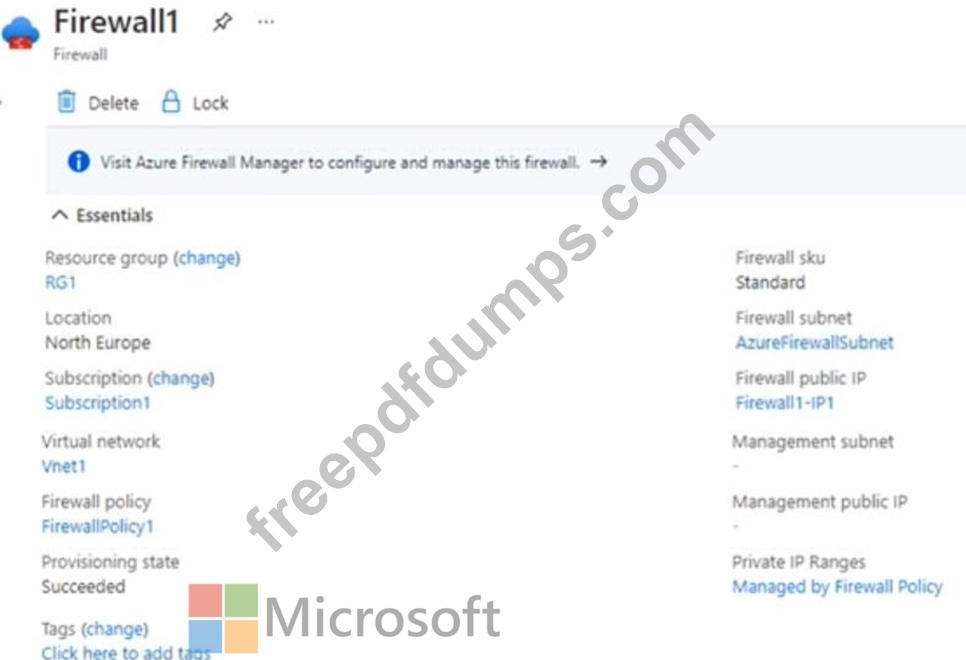
Firewall1 is configured as shown in following exhibit.
FirewallPolicy1 contains the following rules:
* Allow outbound traffic from Vnet1 and Vnet2 to the internet.
* Allow any traffic between Vnet1 and Vnet2.
No custom private endpoints. service endpoints. routing tables, or network security groups (NSGs) were created. For each of the following statements, select Yes if the statement is true. Otherwise, select No. NOTE:
Each correct selection is worth one point.

The virtual network topology is shown in the following exhibit.
Firewall1 is configured as shown in following exhibit.
FirewallPolicy1 contains the following rules:
* Allow outbound traffic from Vnet1 and Vnet2 to the internet.
* Allow any traffic between Vnet1 and Vnet2.
No custom private endpoints. service endpoints. routing tables, or network security groups (NSGs) were created. For each of the following statements, select Yes if the statement is true. Otherwise, select No. NOTE:
Each correct selection is worth one point.

AZ-700 Exam Question 54
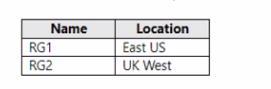
You have an Azure subscription that contains the resource groups shown in the following table.
You have the virtual networks shown in the following table.
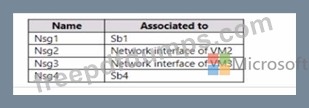
Vne1l contains two virtual machines named VM1 and VM2. Vnet2 contains two virtual machines named VM3 and VM4. You have the network security groups (NSGs) shown in the following table that include only default rules.
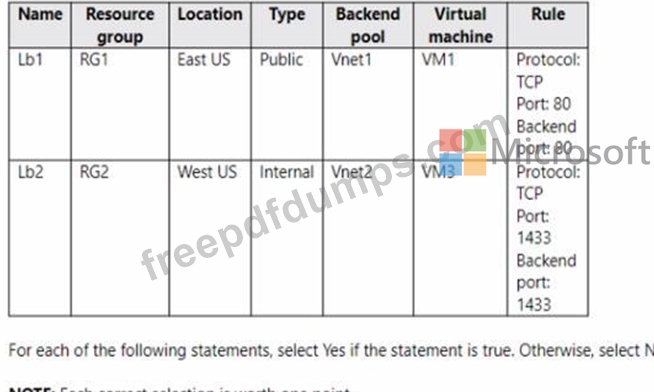
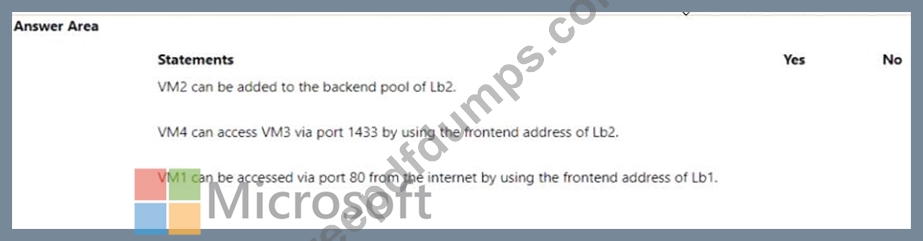
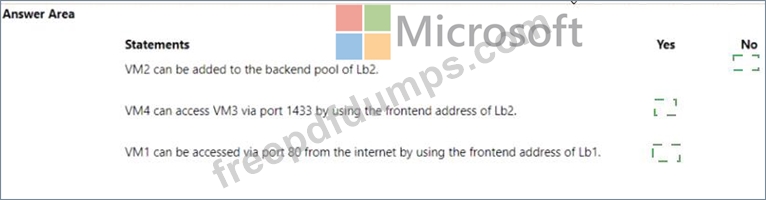
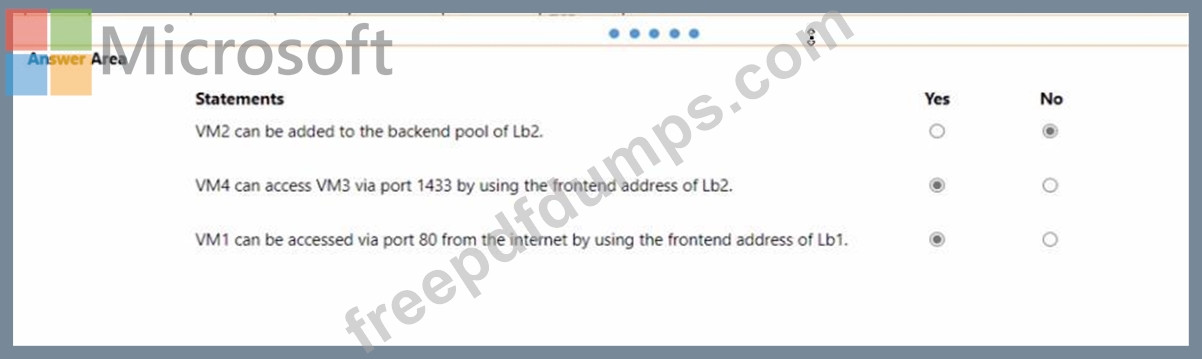
You have the Azure load balancers shown in the following table.
You have the virtual networks shown in the following table.
Vne1l contains two virtual machines named VM1 and VM2. Vnet2 contains two virtual machines named VM3 and VM4. You have the network security groups (NSGs) shown in the following table that include only default rules.
You have the Azure load balancers shown in the following table.
AZ-700 Exam Question 55
Note: This question is part of a series of questions that present the same scenario. Each question in the series contains a unique solution that might meet the stated goals. Some question sets might have more than one correct solution, while others might not have a correct solution.
After you answer a question in this section, you will NOT be able to return to it. As a result, these questions will not appear in the review screen.
You have two Azure virtual networks named Vnet1 and Vnet2.
You have a Windows 10 device named Client1 that connects to Vnet1 by using a Point-to-Site (P2S) IKEv2 VPN.
You implement virtual network peering between Vnet1 and Vnet2. Vnet1 allows gateway transit. Vnet2 can use the remote gateway.
You discover that Client1 cannot communicate with Vnet2.
You need to ensure that Client1 can communicate with Vnet2.
Solution: You enable BGP on the gateway of Vnet1.
Does this meet the goal?
After you answer a question in this section, you will NOT be able to return to it. As a result, these questions will not appear in the review screen.
You have two Azure virtual networks named Vnet1 and Vnet2.
You have a Windows 10 device named Client1 that connects to Vnet1 by using a Point-to-Site (P2S) IKEv2 VPN.
You implement virtual network peering between Vnet1 and Vnet2. Vnet1 allows gateway transit. Vnet2 can use the remote gateway.
You discover that Client1 cannot communicate with Vnet2.
You need to ensure that Client1 can communicate with Vnet2.
Solution: You enable BGP on the gateway of Vnet1.
Does this meet the goal?