

1z0-071 Exam Question 76
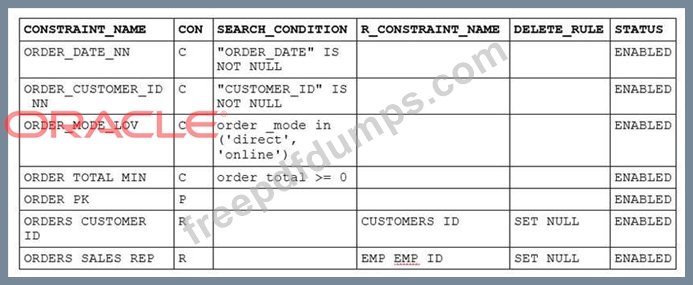
Examine this SELECT statement and view the Exhibit to see its output:
SELECT constraints_name, constraints_type, search_condition, r_constraint_name, delete_rule, status,
FROM user_constraints
WHERE table_name = 'ORDERS';
Which two statements are true about the output? (Choose two.)
SELECT constraints_name, constraints_type, search_condition, r_constraint_name, delete_rule, status,
FROM user_constraints
WHERE table_name = 'ORDERS';
Which two statements are true about the output? (Choose two.)
1z0-071 Exam Question 77
Examine this SELECT statement and view the Exhibit to see its output: (Choose two.) SELECT constraints_name, constraints_type, search_condition, r_constraints_name, delete_rule, status, FROM user_constraints WHERE table_name = 'ORDERS'; Which two statements are true about the output?
1z0-071 Exam Question 78
Examine this statement,which executes successfully:
In which order are the rows displayed?
In which order are the rows displayed?
1z0-071 Exam Question 79
Examine the structure of the ORDERS table:
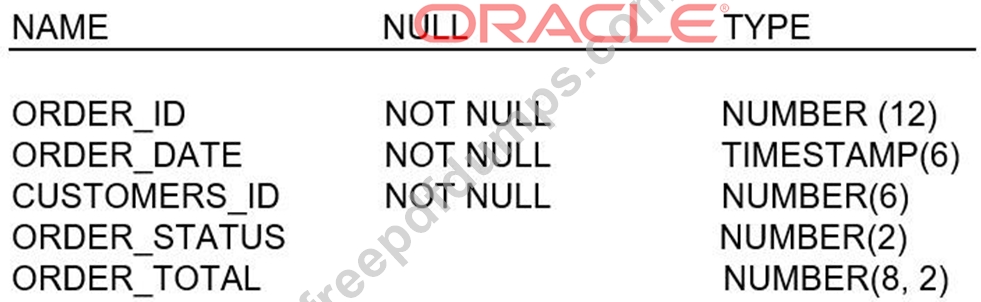
You want to find the total value of all the orders for each year and issue this command:
SQL> SELECT TO_CHAR(order_date,'rr'), SUM(order_total) FROM orders
GROUP BY TO_CHAR(order_date, 'yyyy');
Which statement is true regarding the result? (Choose the best answer.)
You want to find the total value of all the orders for each year and issue this command:
SQL> SELECT TO_CHAR(order_date,'rr'), SUM(order_total) FROM orders
GROUP BY TO_CHAR(order_date, 'yyyy');
Which statement is true regarding the result? (Choose the best answer.)
1z0-071 Exam Question 80
Which two statements are true about a self join? (Choose two.)