

1z0-071 Exam Question 201
View the Exhibit and examine the structure of the PORDUCT_INFORMATION table. (Choose the best answer.)
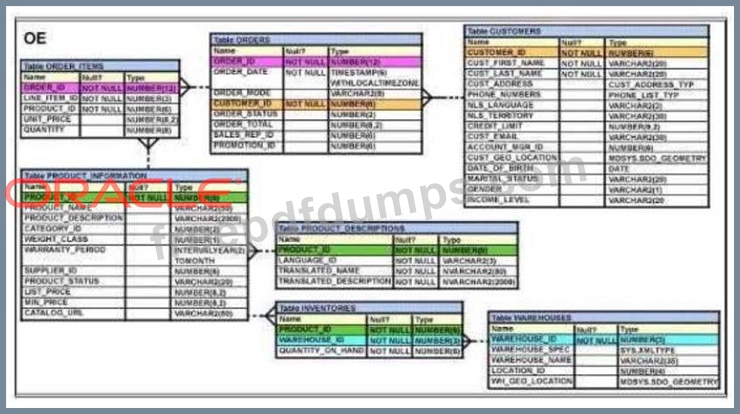
PRODUCT_ID column is the primary key.
You create an index using this command:
SQL > CREATE INDEX upper_name_idx
ON product_information(UPPER(product_name));
No other indexes exist on the PRODUCT_INFORMATION table.
Which query would use the UPPER_NAME_IDX index?
PRODUCT_ID column is the primary key.
You create an index using this command:
SQL > CREATE INDEX upper_name_idx
ON product_information(UPPER(product_name));
No other indexes exist on the PRODUCT_INFORMATION table.
Which query would use the UPPER_NAME_IDX index?
1z0-071 Exam Question 202
You execute this query:
SELECT TO CHAR (NEXT_DAY(LAST_DAY(SYSDATE),'MON' ),' dd"Monday for" fmMonth rrr') FROM DUAL;
What is the result?
SELECT TO CHAR (NEXT_DAY(LAST_DAY(SYSDATE),'MON' ),' dd"Monday for" fmMonth rrr') FROM DUAL;
What is the result?
1z0-071 Exam Question 203
View the Exhibit and examine the structure of the PRODUCT_INFORMATION and INVENTORIES tables.

You have a requirement from the supplies department to give a list containing PRODUCT_ID, SUPPLIER_ID, and QUANTITY_ON_HAND for all the products wherein QUANTITY_ON_HAND is less than five.
Which two SQL statements can accomplish the task? (Choose two.)
You have a requirement from the supplies department to give a list containing PRODUCT_ID, SUPPLIER_ID, and QUANTITY_ON_HAND for all the products wherein QUANTITY_ON_HAND is less than five.
Which two SQL statements can accomplish the task? (Choose two.)
1z0-071 Exam Question 204
Examine the following query:
SQL> SELECT prod_id, amount_sold
FROM sales
ORDER BY amount_sold
FETCH FIRST 5 PERCENT ROWS ONLY;
What is the output of this query?
SQL> SELECT prod_id, amount_sold
FROM sales
ORDER BY amount_sold
FETCH FIRST 5 PERCENT ROWS ONLY;
What is the output of this query?
1z0-071 Exam Question 205
Evaluate these commands which execute successfully CREATE SEQUENCE ord_seq
INCREMENT BY 1
START WITH 1
MAXVALUE 100000
CYCLE
CACHE 5000;
Create table ord_items(
ord_no number(4) default ord_seq.nextval not null,
Item_no number(3),
Qty number(3),
Expiry_date date,
Constraint it_pk primary key(ord_no,item_no),
Constraint ord_fk foreign key (ord_no) references orders(ord_no));
Which two statements are true about the ORD_ITEMS table and the ORD_SEQ sequence?
INCREMENT BY 1
START WITH 1
MAXVALUE 100000
CYCLE
CACHE 5000;
Create table ord_items(
ord_no number(4) default ord_seq.nextval not null,
Item_no number(3),
Qty number(3),
Expiry_date date,
Constraint it_pk primary key(ord_no,item_no),
Constraint ord_fk foreign key (ord_no) references orders(ord_no));
Which two statements are true about the ORD_ITEMS table and the ORD_SEQ sequence?