

1z0-071 Exam Question 136
View the exhibit and examine the description of the DEPARTMENTS and EMPLOYEES tables.
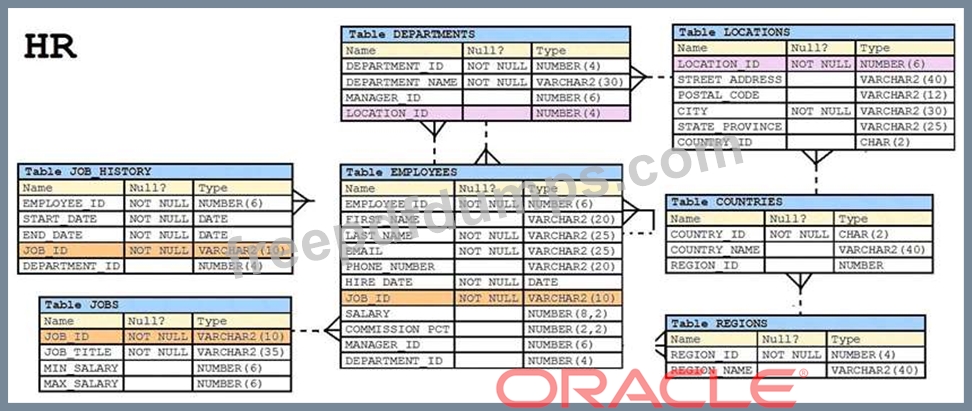
You wrote this SQL statement to retrieve EMPLOYEE_ID, FIRST_NAME, and DEPARTMENT NAME, for all employees:
SELECT employee_id, first_name, department_name
FROM employees
NATURAL JOIN departments;
The desired output is not obtained after executing the above SQL statement. What could be the reason for this?
You wrote this SQL statement to retrieve EMPLOYEE_ID, FIRST_NAME, and DEPARTMENT NAME, for all employees:
SELECT employee_id, first_name, department_name
FROM employees
NATURAL JOIN departments;
The desired output is not obtained after executing the above SQL statement. What could be the reason for this?
1z0-071 Exam Question 137
View the exhibit and examine the description of the DEPARTMENTS and EMPLOYEES tables.
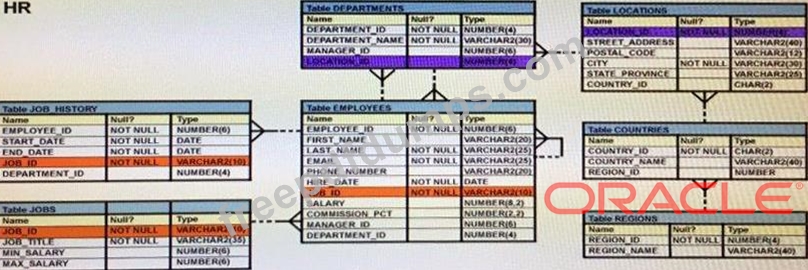
The retrieve data for all the employees for their EMPLOYEE_ID, FIRST_NAME, and DEPARTMENT NAME, the following SQL statement was written:
SELECT employee_id, first_name, department_name
FROM employees
NATURAL JOIN departments;
The desired output is not obtained after executing the above SQL statement. What could be the reason for this?
The retrieve data for all the employees for their EMPLOYEE_ID, FIRST_NAME, and DEPARTMENT NAME, the following SQL statement was written:
SELECT employee_id, first_name, department_name
FROM employees
NATURAL JOIN departments;
The desired output is not obtained after executing the above SQL statement. What could be the reason for this?
1z0-071 Exam Question 138
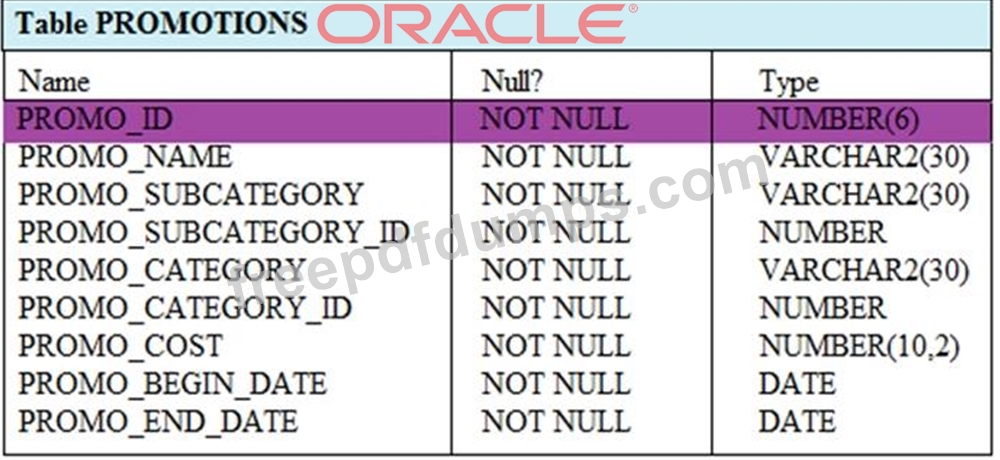
View the Exhibit and examine the data in the PROMOTIONStable.
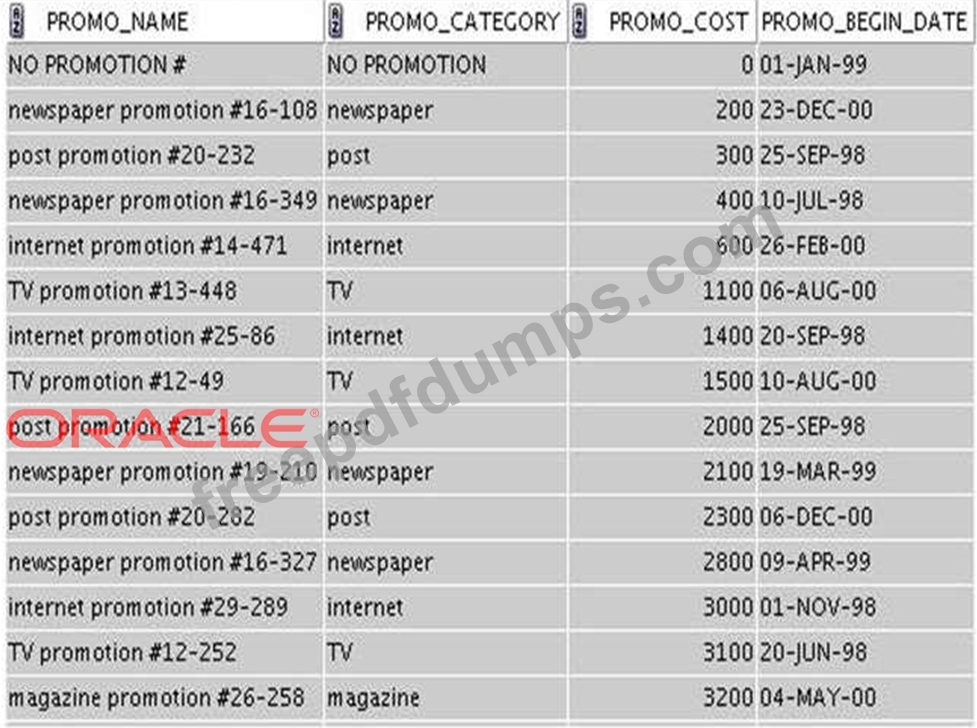
PROMO_BEGIN_DATEis stored in the default date format, dd-mon-rr.
You need to produce a report that provides the name, cost, and start date of all promos in the POSTcategory that were launched before January 1, 2000.
Which SQL statement would you use?
SELECT promo_name, promo_cost, promo_begin_date
PROMO_BEGIN_DATEis stored in the default date format, dd-mon-rr.
You need to produce a report that provides the name, cost, and start date of all promos in the POSTcategory that were launched before January 1, 2000.
Which SQL statement would you use?
SELECT promo_name, promo_cost, promo_begin_date
1z0-071 Exam Question 139
View the exhibits and examine the structures of the COSTSand PROMOTIONStables.
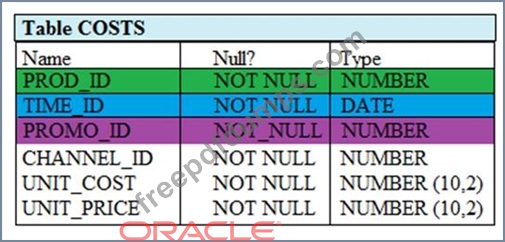
Evaluate the following SQL statement:
SQL> SELECT prod_id FROM costs
WHERE promo_id IN (SELECT promo_id FROM promotions
WHERE promo_cost < ALL
( SELECT MAX(promo_cost) FROM promotions
GROUP BY (promo_end_date-
promo_begin_date)));
What would be the outcome of the above SQL statement?
Evaluate the following SQL statement:
SQL> SELECT prod_id FROM costs
WHERE promo_id IN (SELECT promo_id FROM promotions
WHERE promo_cost < ALL
( SELECT MAX(promo_cost) FROM promotions
GROUP BY (promo_end_date-
promo_begin_date)));
What would be the outcome of the above SQL statement?
1z0-071 Exam Question 140
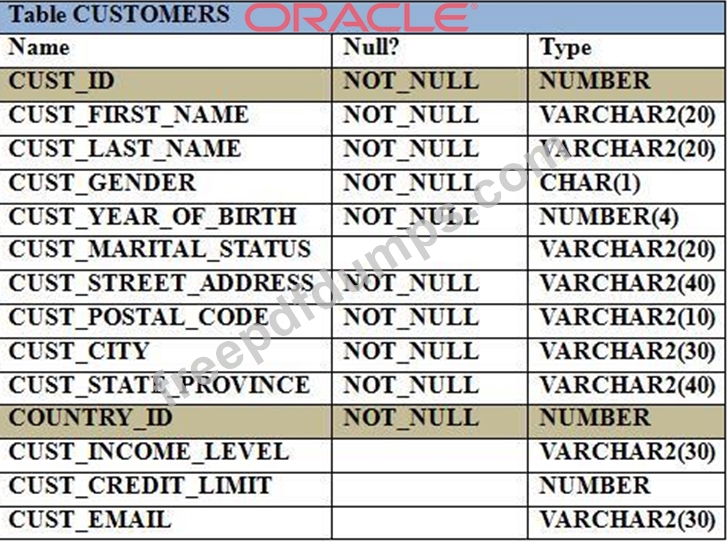
View the Exhibit and examine the structure of the CUSTOMERS table.
Evaluate the following SQL statement:
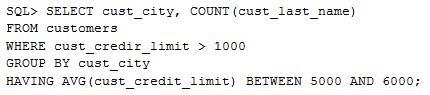
Which statement is true regarding the outcome of the above query?
Evaluate the following SQL statement:
Which statement is true regarding the outcome of the above query?